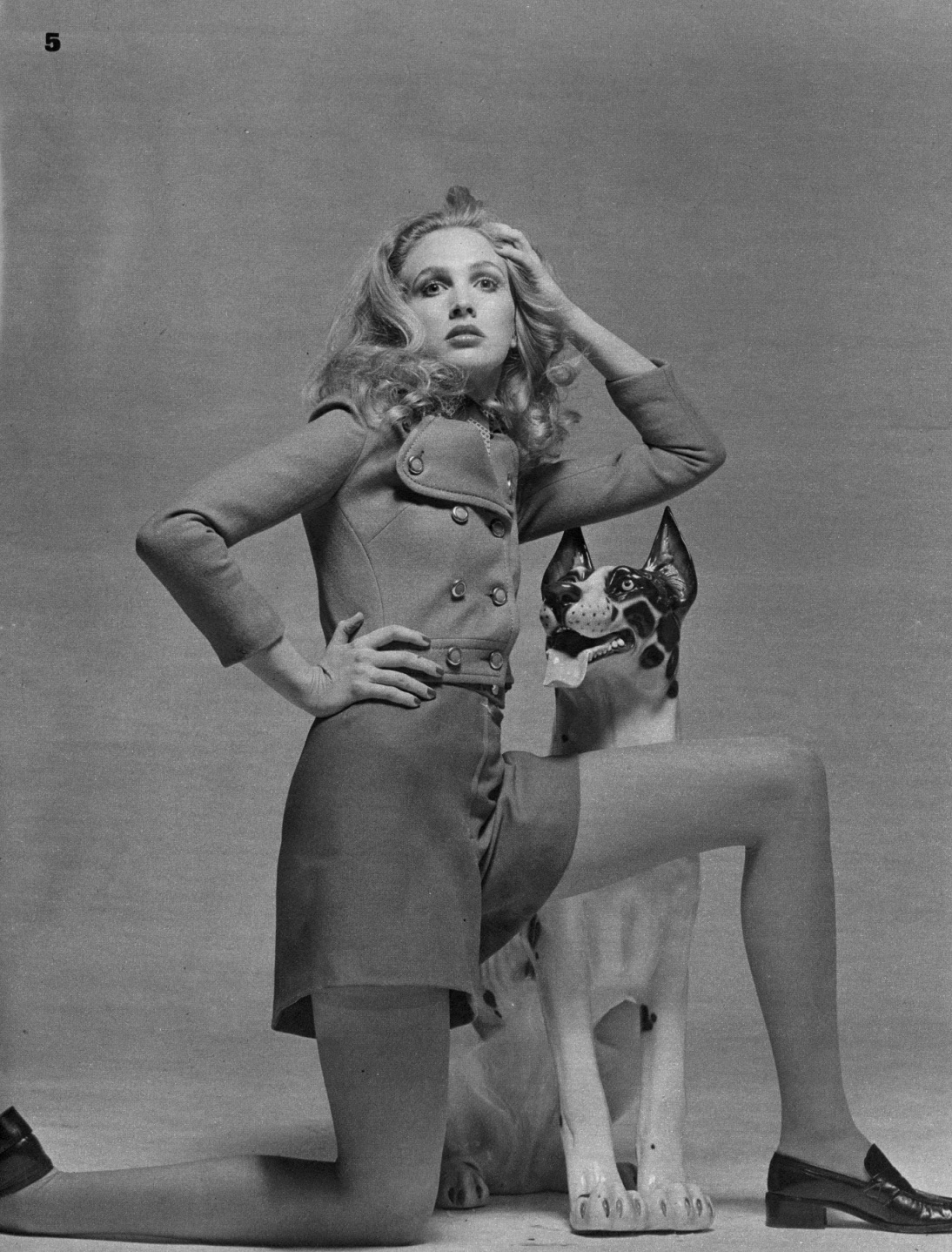
Italy, 1989
Directed by Lamberto Bava
Cast:
Keith Van Hoven, Gino Concari, Martine Brochard, Lino Salemme, Stefano Molinari, Igor Zalewsky, Raffaella La Vecchia, Peter Pitsch, Jacques Sernas
Having been positively surprised by School of Fear (1989), one of the four TV movie thrillers Lamberto Bava directed under the series title High Tension, I decided to check out the remaining three films in this series, and finally sat down with The Man Who Didn’t Want to Die. This film is based on a short story by Giorgio Scerbanenco, a fairly well-known Italian writer who penned the novels on which the hard-hitting Fernando Di Leo crime films Calibre 9 (1972) and Manhunt (1972) are based. This project must have been somewhat special to Lamberto Bava because his father, the great Mario Bava, had once planned on filming this story himself. According to Tim Lucas’ extensive tome Mario Bava: All the Colors of the Dark, Bava Senior had been impressed by Scerbanenco’s short story and meant to make a film out of it in 1972. He got as far as to write a screenplay together with Rafael Azcona and Alessandro Parenzo but the project was put on hold when Bava began to work on Lisa and the Devil (1973) and he didn’t get around to digging up the project again before his untimely death in 1980.
Surprisingly for a Lamberto Bava film – but in keeping with Scerbanenco’s writings – The Man Who Didn’t Want to Die actually plays out more like a cynical crime film than a horror movie. The plot concerns the greedy and unscrupulous art dealer Madame Janaud (Martine Brochard – dubbed by Carolynn De Fonseca), whose primary method for acquiring invaluable art pieces is to hire a gang of brutish thugs to break into the homes of private collectors and steal their art. In charge of these brutal operations is the handsome Fabrizio (Keith Van Hoven – dubbed by Ted Rusoff), who we see forcing his way into a fancy villa together with his four goons at the start of the film. The gang gag and tie up the villa’s only occupants – a caretaker and his sexy wife – before proceeding to strip the place bare of expensive art objects. The most precious piece is the Renoir painting “After the Bath”, which Madame Janaud is eager to get her hands on so she can sell it for a hefty price to obsessive art collector Mr. Miraz (Jacques Sernas – dubbed by Ken Belton).
 Brutal break-in
 The ruthless Madame Janaud
 The coveted Renoir painting that sets all the drama in motion
But, alas, things don’t turn out as planned. While all of Fabrizio’s men are low-life punks, there is one particularly loathsome and disgusting character named Giannetto (Gino Concari) who decides to double-cross the rest of the group. While packing the stolen goods into their van, Giannetto uses a knife to carve the Renoir painting from its frame and then hides it in the garage – planning on returning for it later. This sounds like an awful plan as the place will surely be crawling with cops by then but presumably Giannetto just isn’t particularly bright.

 Giannetto double-crosses his group
But Giannetto isn’t just stupid - he’s also a complete creep who can’t keep his hands off the caretaker’s terrified wife, who lies bound and gagged in the kitchen. Giannetto rips off the defenseless woman’s clothes and begins to rape her while her tied-up husband is forced to watch.


 Giannetto gets nasty
Incredibly, the tied-up husband manages to crawl over to them and save his wife by kicking Giannetto in the head – fatally wounding him! Alerted by all the noise, Fabrizio and the others rush to the kitchen and are stunned when they find Giannetto dying on the floor, and quite frankly, so am I as the badly choreographed kick to the head looked anything but fatal. Anyway, an annoyed Fabrizio shoots and kills the poor caretaker and his half-naked wife, and the goons wrap the dying Giannetto in a carpet, put him in their van and drive off. Since they cannot risk taking their wounded partner to the hospital, Fabrizio wants to kill him but some of the others disagree and they start arguing about what to do. In the end, they decide to strip Giannetto naked, dump him in the woods and leave him for dead.

 Giannetto is dumped and left for dead
But, naturally, Giannetto – in keeping with the film’s title – does not want to die and he somehow makes it till the next morning when he is found and taken to a hospital. Miraculously recovering from his injuries, he swears to get back at the ones who have wronged him and it doesn’t take long before everyone connected to the robbery start being brutally murdered by a giallo-esque killer dressed in black...
 The man who didn’t want to die makes a miraculous recovery at the hospital
 The black-clad killer claims his first victim
The idea of Lamberto Bava making a film from a story that his own father had once planned to adapt is intriguing and one really wishes it had turned into an enjoyable film. But, regrettably, that is not the case. In fact, very little works in The Man Who Didn’t Want to Die – least of all the story, which largely relies on the audience sympathizing with Giannetto. Since Giannetto is such an irredeemably vile character who doesn’t think twice about raping a poor defenseless woman, it’s practically impossible to care about what happens to him. Nevertheless, the film insists on throwing in several sequences where the suspense rests solely on whether or not Giannetto will pull through, and these attempts at creating tension fall completely flat.
In Tim Lucas’ aforementioned Bava book, Lamberto is quoted with saying that he took the unfilmed script his father had written together with Rafael Azcona and Alessandro Parenzo, and made this film. However, the only writer to receive any onscreen credit is Gianfranco Clerici, who is known for co-writing such notable films as The New York Ripper (1982) and Formula for a Murder (1985), and hence it seems reasonable to assume that Clerici and Bava Junior made some changes to the old script. Nevertheless, the Bava book includes a plot summary of Scerbanenco’s original short story and this description does not differ from the plot of the finished film in any significant way, so it appears that Clerici stayed fairly faithful to the original story and script. However, I am willing to bet that if Bava Senior had made this film, he would not have tried to get the audience to sympathize with the Giannetto character. Why would he? What makes the story interesting are not the unlikable characters but rather the way in which their cynicism and greediness lead to their downfall. This point appears to be lost on Clerici and Bava Junior, and their decision to turn Giannetto into some kind of hero is seriously misguided. Furthermore, their attempts to make Giannetto sympathetic fail epically because his abrupt transformation from filthy rapist to sad, puppy-eyed man done wrong is laughably unconvincing. And it doesn’t exactly help that Giannetto is played by Gino Concari, a really terrible actor who also starred in Andrea Bianchi’s miserably bad Massacre (1989) around the same time. Concari’s idea of projecting rage is to constantly grit his teeth while making big, wild eyes like he’s channeling Lou Ferrigno as the Incredible Hulk.
 OK, we get it! Giannetto is dangerous!
With the exception of Giannetto’s girlfriend Vittoria (played by Raffaella La Vecchia), all of the other characters are equally unlikable. That isn’t a problem in itself as unsympathetic characters can work perfectly well as long as they are interesting. But, alas, they are all complete cardboard cutouts who show no discernible traces of personalities.
To make matters worse, Lamberto Bava’s direction is pretty ham-fisted and uninspired. The sequence where the goons escape in their van is incredibly drawn-out and lacking in suspense, and there are numerous sequences where the camera slowly pans across completely uneventful images while Simon Boswell’s nice but repetitive score plays on and on. It’s almost as if Bava had no interest in the film, which can’t be right since it was obviously important to him to realize the project that his father never got to do and that makes the dire end result all the more disappointing.
It isn’t until well over an hour into the proceedings that the thugs finally start to get bumped off in various gruesome ways – with one character being shot repeatedly in the face with a nail gun, and another getting his head squashed like a pancake. While neither of these moments are as gory as they may sound, they do at least manage to animate the film somewhat. The only stand-out kill scene, however, is when an unlucky guy is dispatched by having his head repeatedly smashed against a toilet and then getting his bleeding face shoved down the toilet bowl till he drowns – something which is actually filmed from the toilet’s point of view. It’s quite a hideous and uncomfortable sight but it’s well executed and the toilet point of view shots are pretty stylish.
 Nail gun massacre
 Death by toilet!
Playing the leading role of Fabrizio is actor Keith Van Hoven, who was born in England to a Scottish mother and a Dutch father. Van Hoven started out as a fashion model and this brought him to Italy, where he found some success as an actor. His biggest success was a starring role opposite popular actress Federica Moro in the comedy TV series College (1989) but Van Hoven also landed leads in a couple of horror films such as Lucio Fulci’s The House of Clocks (1989), Umberto Lenzi’s Black Demons (1991) and of course this film. He is very handsome but, sadly, he is also pretty inexpressive and hence he fails to make much of an impression. The supporting cast is largely made up of people who are familiar from various other Bava movies. Two of Fabrizio’s thugs are played by Lino Salemme and Stefano Molinari. Sinister-looking Salemme should be familiar for his parts as one of the punk kids in Demons (1985) and as the creepy tavern-keeper in Graveyard Disturbance (1987), while Molinari played the ugly demon in the movie being shown on TV in Demons 2 (1986). There’s also Madame Janaud’s efficient henchman Britz, played by German actor Peter Pitsch, who also played one of the punks in Demons and was a dead serial killer in You’ll Die at Midnight (1986). While none of these guys really get to shine, they all have the perfect look for the parts they’re playing and it’s nice to have some familiar faces around.
The only big names in the cast are Martine Brochard and Jacques Sernas – two excellent French actors with an impressive list of credits in Italian genre cinema – but neither of them are used to their fullest potential here. Sernas in particular is wasted in what is basically a glorified cameo. Brochard fares better in that she gets a fair amount of screen time (though hardly enough to justify her prominent top-billing) and she acquits herself nicely as the greedy Madame Janaud. She probably didn’t put too much effort into her performance but she gets away with it and she looks great!
 Old pros Jacques Sernas and Martine Brochard infuse the film with some much needed elegance and professionalism
It’s a real shame that The Man Who Didn’t Want to Die turned out as badly as it did because this extremely cynical tale had the potential for turning into a really hard-hitting crime/horror film. It would have been interesting to see what Mario Bava could have made of the material but in the hands of his son this sadly turned into an incompetent mess that isn’t worthy of anyone’s time or attention! I really regret having to say so because it’s obvious that Lamberto’s intentions were noble, and he is capable of delivering much better work.
© 2012 Johan Melle
The cast:
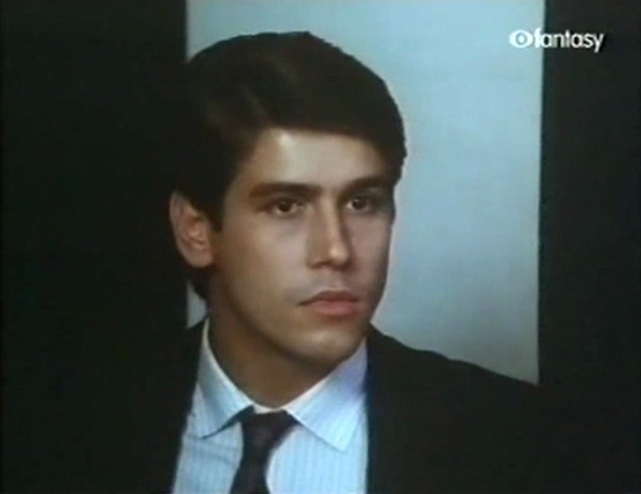 Keith Van Hoven as Fabrizio
 Gino Concari as Fabrizio
 Martine Brochard as Madame Janaud
 Lino Salemme as Tito
 Stefano Molinari as Berto
 Igor Zalewsky as Luigi
 Raffaella La Vecchia as Vittoria
 Peter Pitsch as Britz
Jacques Sernas as Mr. Miraz